Recognising Roof Damage That Should Not Be Left Unchecked
Strong winds and heavy rain can damage a roof without causing an immediate or obvious leak. Tiles may move slightly, flashing can lift and fixings may loosen while the roof still appears largely intact from ground level. Once this protection has been disturbed, further rain can enter beneath the covering and affect the materials below.
For property owners in Henley-on-Thames, Oxfordshire, knowing when storm damage requires urgent attention can help prevent an exposed or unstable area from deteriorating further.
Water Is Entering the Property
Active water ingress is a clear reason to arrange prompt roof attention. Dripping water, spreading ceiling stains and dampness around upper walls suggest that the roof is no longer keeping the property weatherproof.
Water may travel along underlay, rafters or insulation before appearing indoors, so the visible leak may be some distance from the actual defect. Moving possessions away from the affected area can reduce further damage, but the external source still needs to be identified.
The Ceiling Is Bulging or Sagging
A ceiling that begins to bow, bulge or feel unusually soft may have water collecting above it. This can happen when damaged roofing allows moisture to accumulate faster than it can drain or dry.
The area beneath a visibly distorted ceiling should be avoided. It should not be pressed, pierced or disturbed, as saturated material may be unstable. An urgent assessment can establish both the entry point and the extent of moisture above the ceiling.
Tiles or Slates Are Missing
One missing tile may create a direct route for wind-driven rain, particularly if the underlay beneath it is damaged or deteriorated. Several missing tiles leave a larger area exposed and may indicate that neighbouring materials or fixings have also been loosened.
Warning signs visible from the ground include:
- Clear gaps in the roof covering
- Tiles or slates lying in the garden
- Uneven rows on the roof slope
- Pieces of roofing material near the property
- Exposed underlay or battens
- Further movement during strong winds
Loose materials can also fall without warning, so the area below should be kept clear until the roof has been checked.
Roofing Materials Are Hanging or Unstable
A tile, section of flashing, gutter or fascia that is visibly loose may detach during another gust. Damage close to entrances, paths or frequently used areas deserves particularly prompt attention.
Do not attempt to pull down or reposition hanging materials from a ladder. A roofer can assess how securely the component is attached and whether the surrounding roof has also been affected.
A Tree or Heavy Debris Has Struck the Roof
An impact can cause more damage than is visible from outside. Even if the roof covering appears largely intact, the force may have cracked tiles, displaced flashing or affected battens and other supporting components.
Signs of serious impact damage can include:
- A visible dip in the roofline
- Broken or displaced coverings
- Cracked internal ceilings
- New gaps around roof junctions
- Debris embedded in the roof
- Sudden water ingress following the impact
The area beneath the impact point should be avoided until its condition has been professionally assessed.
The Roofline Has Changed Shape
A ridge or roof slope should maintain a consistent line. A new dip, twist or uneven section following a storm may indicate that the damage extends beyond the outer covering.
Changes in the roofline require urgent investigation because surface repairs alone may not be sufficient. A professional assessment can determine whether the visible distortion is localised or connected to the supporting structure.
Chimneys and Flashing Have Been Disturbed
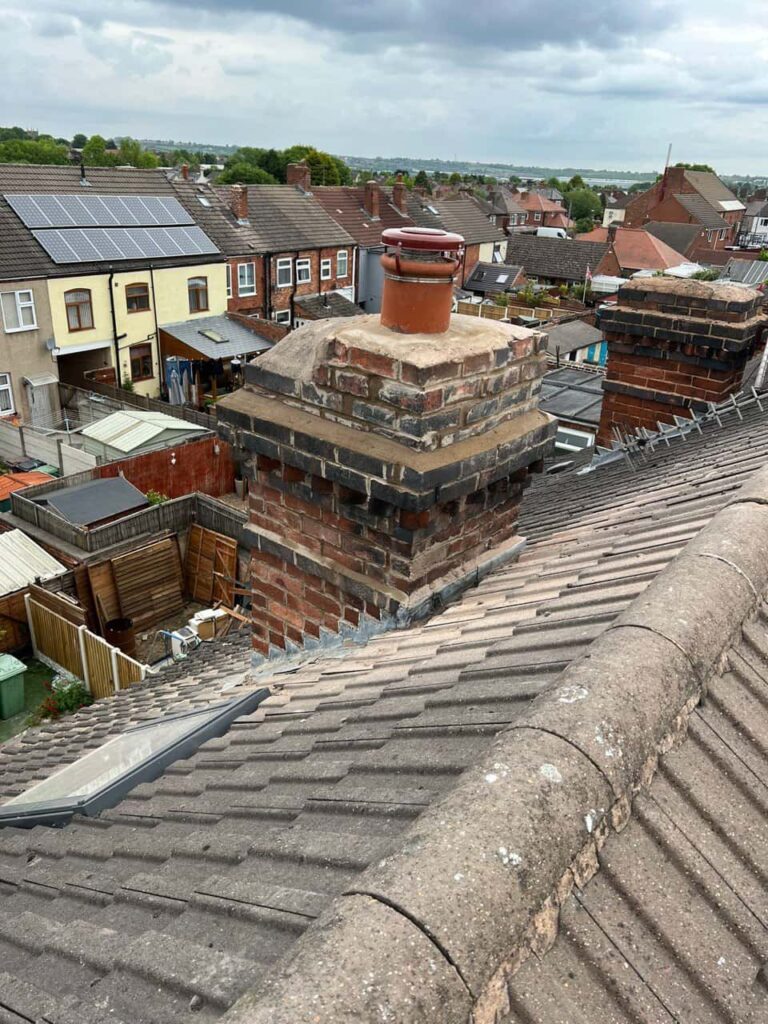
Chimneys are exposed to significant wind pressure, while the flashing around them relies on secure joints to keep water out. Storms can loosen flashing, dislodge mortar or damage chimney components.
Prompt attention may be needed if:
- Flashing has lifted or separated
- Debris has fallen from the chimney
- Mortar joints appear damaged
- The chimney looks uneven
- Dampness develops around the chimney breast
- Roofing materials beside the chimney have moved
These defects may allow water to spread beneath neighbouring tiles even when the leak initially appears small.
Water Is Close to Electrical Fittings
Water appearing near ceiling lights, sockets or electrical equipment requires extra caution. Do not touch wet fittings or attempt to investigate hidden wiring.
Keep people away from the affected area and contact appropriately qualified professionals. The roofing defect and any affected electrical components should both be assessed before the area is used normally again.
Flat Roofing Has Torn or Lifted
Strong winds can lift poorly secured edges, seams or sections of a flat roof covering. Splits may also form around outlets, upstands and penetrations.
A lifted section can allow each new gust to cause further separation. If the covering is visibly loose, torn or allowing water inside, prompt repair can help contain the damaged area.
No Leak Does Not Always Mean No Urgency
Some storm damage remains dry until rain arrives from a particular direction or lasts for an extended period. A displaced tile may still overlap the tile below while leaving the underlay more exposed than intended.
A timely inspection is advisable when visible movement, fallen fragments or changes to the roofline are present, even if there is no internal staining. Early attention may prevent a small opening from becoming a larger repair.
What Should You Do After a Storm?
Begin with observations from ground level and from inside the property where access is safe. Note any ceiling marks, damp insulation, fallen materials or changes in the roof’s appearance.
Avoid:
- Walking on the roof
- Using a ladder in wet or windy conditions
- Standing beneath loose roofing materials
- Disturbing a sagging ceiling
- Attempting temporary repairs from an unsafe position
Photographs taken safely from the ground can help record visible changes, while a professional inspection can examine areas that cannot be assessed from below.
Why a Wider Inspection Is Important
The first visible defect may not be the only one. Wind that moves a single tile can also loosen nearby fixings, affect ridge materials or disturb flashing elsewhere on the same slope.
A thorough inspection should consider the damaged area, adjoining roof coverings, junctions, drainage and accessible internal spaces. This makes it possible to address connected weaknesses rather than repairing only the most obvious symptom.
Conclusion
Storm damage needs urgent roof attention when water is entering the property, ceilings are sagging, materials are loose, tiles are missing or the roofline has changed. Impact damage, disturbed chimney components and moisture near electrical fittings also require prompt professional assessment.
If your roof in Henley-on-Thames, Oxfordshire, has been affected by severe weather, LS Roofing Henley-on-Thames can inspect the damage and determine the appropriate repair. Acting promptly can help secure vulnerable areas before further wind or rain increases the extent of the problem.
Call us on: 01491 527 598
Click here to find out more about LS Roofing Henley-on-Thames
Click here to complete our contact form and see how we can help with your roofing needs.