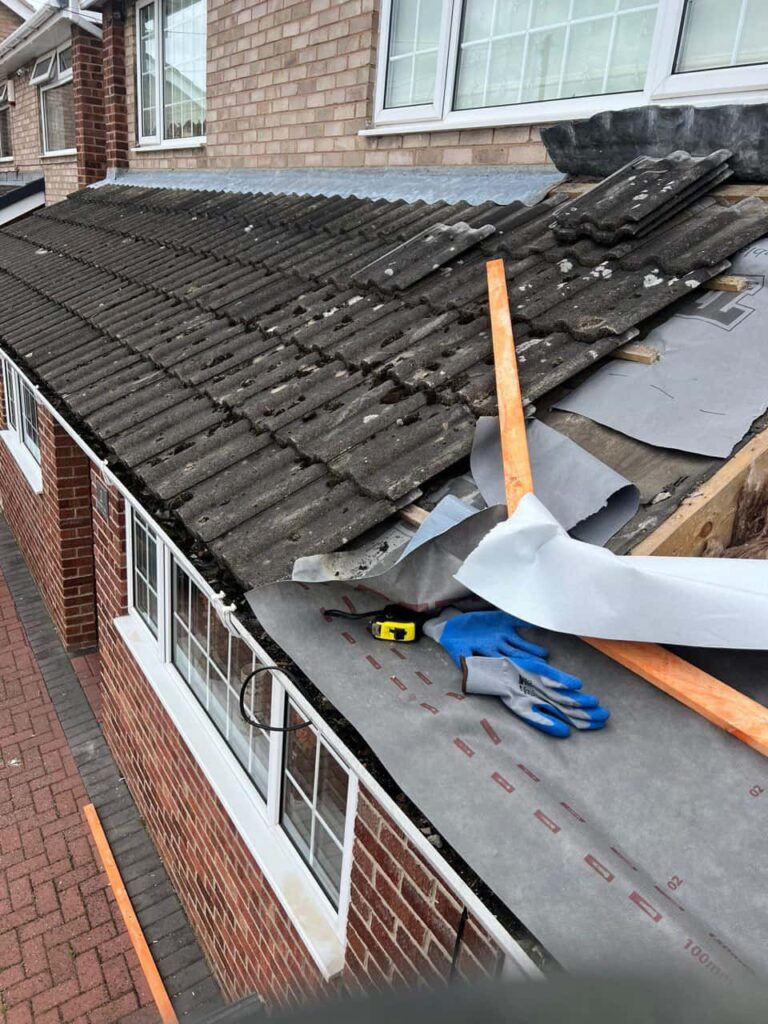
Finding water inside your property does not always make the cause immediately obvious. A damp patch on a ceiling, staining near a wall or occasional dripping during heavy rain may suggest a roofing problem, but the point where water becomes visible can be some distance from where it originally entered.
For homeowners in Henley-on-Thames, Oxfordshire, uncertainty about the source of water is a good reason to have the roof properly assessed. A professional roof inspection can help determine whether the roof is responsible, identify the likely entry point and establish what needs attention before repairs are undertaken.
The objective is not simply to find something on the roof that looks imperfect. It is to understand how water is entering the property and address the underlying cause.
Why Is It Worth Checking the Roof When the Source of Water Is Unclear?
Roof leaks can be difficult to diagnose because water does not always travel vertically from the external defect to the internal symptom.
Once rainwater gets beneath the roof covering, it may follow underlay, timbers or other surfaces before reaching a point where it becomes visible. This can make a leak appear to originate from an entirely different section of the roof.
A professional assessment considers both the location of the internal symptoms and the condition of relevant external roofing components. This provides a much stronger basis for identifying the problem than relying on the location of a damp patch alone.
Water Can Travel Before It Becomes Visible
One of the most important things to understand about roof leaks is that the visible water is often the final stage of its journey.
A relatively small weakness higher up the roof may allow moisture to enter. Gravity can then carry that water beneath tiles or slates and along structural components until it finds an opening into the room below.
This means that repairing the roof directly above a ceiling stain may not necessarily solve the problem.
Tracing the likely route of water is therefore an important part of accurate roof diagnosis.
Some Roof Leaks Only Appear in Certain Weather
A roofing defect may not cause water ingress every time it rains.
Some leaks become noticeable only during prolonged rainfall, while others may occur when wind drives rain towards a particular side of the roof. This can explain why an internal area sometimes becomes damp and then appears completely dry during subsequent rainfall.
Information about when the problem occurs can provide useful clues during an inspection.
If possible, homeowners should note whether the water appears during heavy rain, persistent rainfall or particular weather conditions. These observations can help narrow down the areas requiring closer attention.
Check More Than the Most Obvious Roof Covering
Tiles and slates are often the first components homeowners associate with a leaking roof, but they are only part of the weatherproofing system.
Water ingress can also develop around:
- Roof valleys
- Lead flashing
- Ridge areas
- Verges
- Roof junctions
- Penetrations through the roof
- Damaged or displaced roofing materials
- Areas where different roof sections meet
A proper assessment considers these details together rather than assuming that a visibly damaged tile must be responsible.
A Small External Defect Can Cause Noticeable Internal Dampness
The amount of visible damage outside does not always reflect the amount of disruption caused inside.
A relatively small gap or deteriorated detail can provide enough access for rainwater to penetrate repeatedly. Over time, moisture may spread across a larger internal area, making the original defect difficult to identify from the symptoms alone.
This is another reason why an apparently minor roofing weakness should be assessed in context rather than dismissed solely because it looks small.
Previous Repairs Can Make Diagnosis More Complicated
Where a roof has received repairs previously, a new damp patch may naturally lead homeowners to suspect that the earlier work has failed.
That is not necessarily the case.
The previous repair may still be functioning correctly while another nearby component has deteriorated. Water can then travel towards the same internal area, making the symptoms appear similar to the original problem.
A roof assessment can examine both previous repair areas and surrounding materials to determine where the current weakness is located.
Repeated Dampness Should Not Be Treated as an Internal Problem Alone
When staining appears on a ceiling or wall, attention can easily focus on redecorating the affected surface.
However, if moisture is continuing to enter from above, treating the internal appearance does not address the cause. The staining may simply return.
Where dampness appears to be associated with rainfall, establishing whether the roof is allowing water into the property should come before dealing with the cosmetic effects.
The priority is to stop the source of moisture and then allow the affected area to recover appropriately.
Why Guessing at Roof Repairs Can Be Ineffective
When the cause of a leak is unclear, carrying out repairs based purely on assumptions can result in work being directed towards the wrong area.
For example, replacing a visibly weathered tile may seem logical, but if the actual weakness is deteriorated flashing nearby, the leak may continue.
An accurate diagnosis allows the repair to be targeted towards the component responsible for the water ingress.
This does not necessarily mean extensive roofing work will be required. In many situations, a careful assessment may identify a specific localised defect that can be addressed directly.
The Wider Condition of the Roof Provides Important Clues
An inspection should not consider a suspected defect completely in isolation.
The condition of surrounding roofing materials can help establish whether the issue is a one-off problem or part of a broader pattern of deterioration.
If the surrounding roof is generally sound, a focused repair may be entirely appropriate. If several related areas show deterioration, understanding those connections can help prevent one defect from being repaired while another continues to allow water through.
The purpose of looking more widely is to make the repair decision more informed, not to recommend unnecessary work.
What Information Can Help During a Roof Inspection?
Homeowners can provide useful information that helps build a clearer picture of the problem.
Consider when the dampness was first noticed, how frequently it appears and whether it becomes worse during particular types of weather. It can also be useful to note whether the affected area changes in size or whether water has appeared in more than one location.
These details, combined with a physical assessment of the roof, can help establish patterns that might otherwise be difficult to recognise.
Why Early Investigation Is Sensible
An uncertain leak can be tempting to monitor, particularly if the affected area dries between periods of rainfall.
However, the fact that water is not constantly visible does not necessarily mean that the underlying weakness has disappeared. The next period of suitable weather may allow moisture to enter again.
Investigating the cause provides clarity. If the roof is found to be sound, other possible sources can be considered. If a roofing defect is identified, an appropriate repair can be planned based on what is actually happening.
Professional Roof Assessment in Henley-on-Thames
Finding the source of water ingress requires a methodical approach, particularly when there is no obvious external damage corresponding with the internal symptoms.
At LS Roofing Henley-on-Thames, we assess roofing problems in Henley-on-Thames, Oxfordshire, by considering the location and pattern of water ingress alongside the condition of relevant roofing materials and details. The focus is on identifying the cause before determining what repair is appropriate.
This approach can be especially valuable where dampness is intermittent, previous attempts have not resolved the problem or there is simply no obvious explanation for where the water is entering.
Conclusion
If water is appearing inside your property and you are unsure where it is coming from, having the roof checked is a sensible step. Roof leaks can travel before becoming visible, appear only during particular weather conditions and originate from details that are difficult to identify without a proper assessment.
The most important part of resolving the problem is establishing the cause rather than assuming that the nearest visible roof defect is responsible. An accurate inspection can determine whether the roof is involved and help ensure that any repair is directed towards the actual source of water ingress.
If you are experiencing unexplained water ingress at your property in Henley-on-Thames, Oxfordshire, LS Roofing Henley-on-Thames can assess the roof and help identify the underlying problem. Contact our team to arrange a professional roof inspection and discuss the appropriate next steps.
Call us on: 01491 527 598
Click here to find out more about LS Roofing Henley-on-Thames
Click here to complete our contact form and see how we can help with your roofing needs.