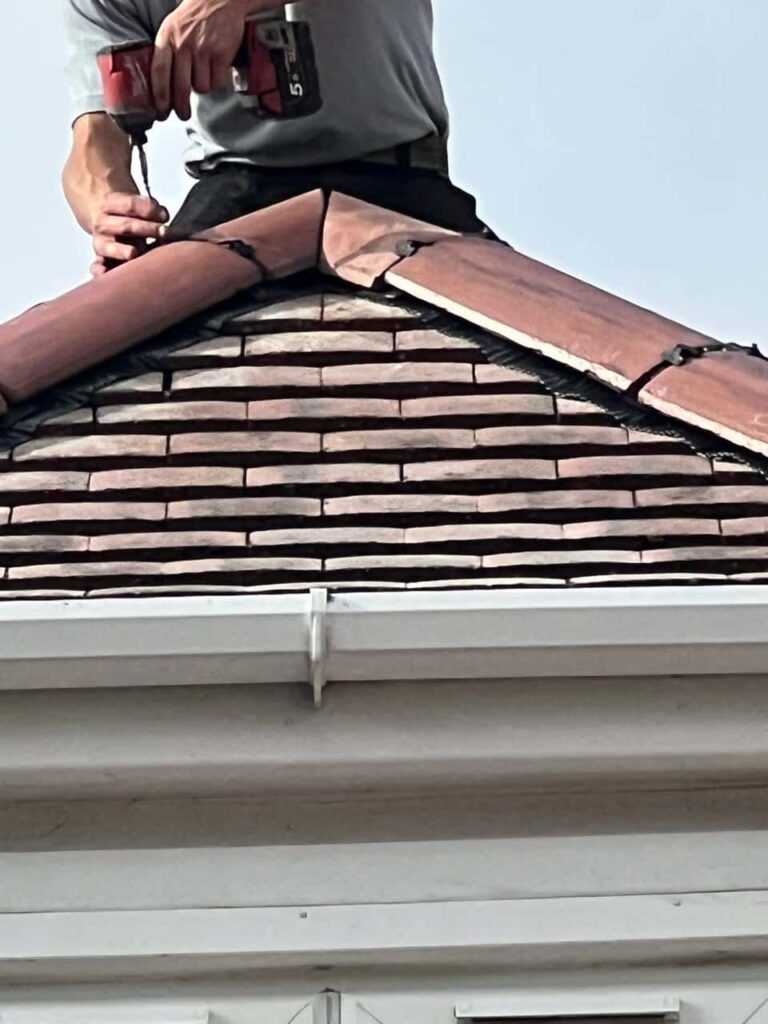
Roof repairs are often the correct solution when damage is confined to a small area and the surrounding materials remain sound. A slipped tile, isolated flashing defect or localised section of damaged underlay can usually be repaired without replacing the complete roof.
However, repeated problems may indicate that deterioration is no longer limited to one component. For homeowners in Henley-on-Thames, Oxfordshire, a professional assessment can establish whether another repair is likely to remain dependable or whether a new roof would provide a more complete solution.
When Can a New Roof Be More Suitable Than Further Repairs?
The number of previous repairs is not the only factor to consider. Their location, the reason they were needed and the condition of the remaining roofing system are equally important. Several unrelated repairs on an otherwise sound roof may not be concerning, but recurring failures across connected components require closer investigation.
Leaks Continue to Return
A recurring leak may mean that its source has not been identified. Water can travel along underlay, rafters and other concealed surfaces before appearing inside the property, making the entry point difficult to trace.
Leaks may also return because deterioration affects several nearby areas. When the covering, underlay and roof junctions are all becoming unreliable, another localised repair may only address one route through which water can enter.
Tiles Are Failing Across Several Areas
Replacing a small number of cracked or slipped tiles can restore an otherwise serviceable roof. The situation changes when tiles are breaking, moving or becoming porous across multiple slopes.
Widespread failure can indicate that the covering is approaching the end of its useful condition. New fixings may also be difficult to secure if the neighbouring tiles and battens have become fragile.
The Underlay Has Deteriorated
Underlay acts as a secondary barrier beneath the tiles. Over time, it may become brittle, tear around fixings or develop openings that allow moisture to reach the loft.
Because underlay is concealed, its deterioration may not be apparent from ground level. If damage is widespread, replacing individual tiles above it will not restore the complete weather-resistant system. A new roof allows the covering to be removed so that the underlay and supporting layers can be renewed properly.
Battens and Fixings Are No Longer Reliable
Roof tiles depend on secure fixings and sound battens. Where these components have weakened, tiles may repeatedly slip even after being repositioned or replaced.
Extensive batten deterioration cannot be corrected through isolated surface repairs. Removing the existing covering provides access to the complete supporting framework, allowing defective materials to be replaced before the new roof covering is installed.
Flashing and Roof Junctions Are Failing Together
Chimneys, valleys, walls and roof penetrations require carefully formed weatherproof junctions. If several flashing details are deteriorating at once, leaks may appear in different parts of the roof.
Repeated sealing may not be sufficient where the surrounding materials are unstable or poorly aligned. Re-roofing provides an opportunity to reconstruct vulnerable details and integrate them correctly with the new covering.
Repairs Are Becoming Increasingly Frequent
Occasional repairs are expected during the life of many roofs. A developing pattern of defects is more significant, particularly when each problem affects a different component.
Warning signs can include:
- Leaks appearing in new locations
- Tiles repeatedly slipping or cracking
- Mortar breaking away from ridges or verges
- Flashing separating from adjoining materials
- Damp insulation or stained roof timbers
- Several repaired areas beginning to fail
- Increasing movement across the roof covering
When these signs occur together, the roof should be assessed as a complete system.
Previous Work Has Created an Inconsistent Roof
A roof that has undergone numerous repairs may contain materials of different ages, profiles and fixing methods. Individual sections may remain serviceable, but the overall covering can become increasingly difficult to maintain as one repaired area places pressure on another.
A new roof creates a consistent system in which tiles, underlay, battens, fixings and junction details are designed to work together.
The Roof Structure Requires Attention
Persistent leaks can affect battens, rafters and other timber components. Staining, softness, distortion or a visibly uneven roofline may indicate that moisture or movement has affected the supporting structure.
Surface repairs cannot resolve weakened support. Removing the roof covering allows the condition of the underlying structure to be examined and necessary work completed before the new materials are fitted.
A New Roof Can Correct Poor Existing Details
Some recurring problems result from the way the roof was previously constructed. Inadequate overlaps, poorly formed valleys, unsuitable ventilation or incorrect junction details can create persistent weaknesses.
Installing a new roof provides the opportunity to correct these details rather than repeatedly working around them. This can improve water management, material alignment and overall reliability.
Does Every Older Roof Need Replacing?
Age alone does not determine whether a roof requires replacement. An older roof may remain suitable for repair when its covering and supporting components are generally sound.
Likewise, a newer roof can experience widespread problems if materials were installed incorrectly or unsuitable details were used. The decision should be based on condition, performance and the extent of deterioration rather than age alone.
Why a Complete Roof Assessment Matters
A professional roofer should inspect the roof covering, flashing, valleys, ridges, underlay, battens and accessible internal timbers. Reviewing the location and frequency of previous repairs can also reveal whether problems are isolated or connected.
This assessment helps avoid unnecessary replacement while recognising when further patching is unlikely to provide a reliable result.
Conclusion
A new roof can solve problems that repeated repairs cannot when deterioration affects the covering, underlay, battens, fixings or structural components across a wider area. It can also correct poorly formed junctions and replace an inconsistent collection of ageing repairs with a complete weather-resistant system.
LS Roofing Henley-on-Thames can assess whether your roof remains suitable for repair or requires a more comprehensive solution. If roofing problems continue to return, contact our team to arrange a professional inspection in Henley-on-Thames, Oxfordshire.
Call us on: 01491 527 598
Click here to find out more about LS Roofing Henley-on-Thames
Click here to complete our contact form and see how we can help with your roofing needs.